Preparing for and having a beautiful natural home birth is actually much simpler than you might imagine (or than you might have been led to believe by medical obstetrics.) I birthed all three of my children at home, naturally and beautifully. It is not difficult. All that is required is for you to take complete responsibility for your experience so that you can have a truly sovereign and natural home birth.
What does it mean to take full responsibility for your experience and what does it involve? Below I have provided some background on obstetrics, as well as three key steps that will send you on your way to attaining the natural home birth that you desire.
The obstetric system: Let’s get something straight…
First, understand that the obstetric system of today is not designed to empower you in your decisions about perinatal health. In reality, it is about making you dependent and subservient. In the recent past, obstetrics was a purely female arena, informal in nature, with elder women in the role of birth attendants or birth witnesses who would guide or advise young mothers. It was only during the 17th and 18th centuries that male physicians began to insert themselves into this historically female space, with the introduction of the obstetric forceps. Obstetrics then became highly medicalized and is now a normal part of medical student training, despite childbirth being a completely natural and non-medical phenomenon.
Unfortunately, women all over the world who are going through normal healthy pregnancies are persuaded to hand over their decision-making responsibility to their medical obstetricians. Interventions such as scans, screening tests, inductions, forceps use, epidurals, episiotomies and Caesarean sections are the bread and butter of these professionals. Thus, when your OB/GYN encourages (or coerces) you to agree to one or more of these interventions, understand that they are monetarily incentivized to do so.
So who is working in my best interest?
When it comes to having your best interest in mind, consider the obstetrician’s monetary incentives along with his obligation to maintain a practice license. He will usually act in service of maintaining that license and not necessarily in the interest of an individual woman. It is also not unheard of for obstetricians to make recommendations heavily influenced by personal convenience or out of fear of litigation.
It is important to point out that registered midwives too, have an obligation to maintain their registration status which means that when interacting with a pregnant woman, they cannot purely have the woman’s best interest in mind. Registered midwives must consider the rules and guidelines set down by their regulatory body, first and foremost.
I don’t know about you, but when I consider these issues or conflicts of interest, I feel the need to distance myself from medical obstetrics and most registered midwives as much as possible. Having a registered obstetric professional direct my care is in complete opposition to my personal sovereignty and not at all in my best interest.
Pregnancy is a completely natural state for a woman to be in. As mammals, we women possess instinct and intuition about our bodies that we have come to shy away from, ignore or suppress. If we do voice our instinctual concerns, then the medical authority overrules and we are taught to simply accept this. Needless to say, a woman herself knows what is in her and her baby’s own best interest. With this in mind, let’s take a look at the steps for achieving a beautiful natural home birth.
Step 1: Education – learn about natural birth
The first step to achieving a beautiful natural home birth is to shift your mindset from a mode of pure acceptance to that of curiosity. If you are already in that space, then congratulations – you are already halfway there. Curiosity is key to addressing any misguided or irrational fears about pregnancy and childbirth, and it will also guide you in your self-education.
Begin your self-education by reading books, listening to a podcast, watching a documentary, or using whichever media appeals to you. When I became pregnant with my first child, I knew that I wanted a natural home birth. I had become familiar with the positive aspects of home birth through the documentary “The Business of Being Born,” which Mr. B and I watched together early in our relationship. I highly recommend it as an introduction to the concept of home birth and to understand some of the issues that are sure to arise when opting for a hospital birth.
During my first pregnancy, I read some fairly mainstream books on pregnancy and birth which did educate me in certain ways, but which were of the medical interventionist approach. It wasn’t until my second pregnancy that I really began to dive into the details through an online hypnobirthing course I took through The Positive Birth Company. What I learned about the female body helped me to better understand the process of labour and therefore, to tolerate it better. It also provided me with the tools for attaining the positive mindset and release of fear that is so crucial for a natural birth.
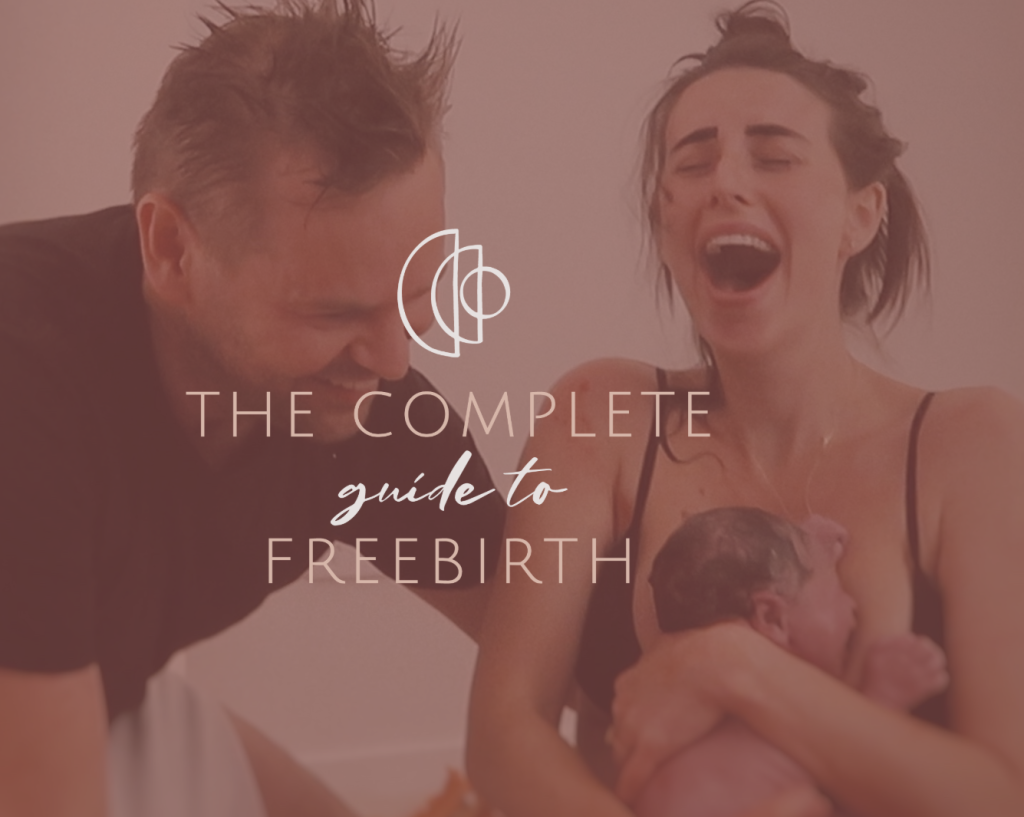
During my third pregnancy I took a course on freebirth (unassisted birth) through the Free Birth Society, called “The Complete Guide to Freebirth.” This course is full of excellent information on pregnancy and birth, and is very comprehensive. It provides you with the information you need to decide whether freebirth is for you, and it has been, by far, the most useful compendium that I have found on sovereign pregnancy and home birth, even for those who would like to have a birth attendant of some kind.
Step 2: Hire a birth attendant or choose Free Birth
At the time of my first pregnancy, we had access to publicly funded midwives, so we dutifully found a team near us and began appointments with them. Unfortunately, my experience there was abysmal. I somehow found myself agreeing to have a male midwifery student come to my appointments and even incompetently take blood on one occasion, for the glucose challenge test. It was not made clear to me that I could decline any or all of the pregnancy screening tests and ultrasound scans if I wanted to. At that time, I naively believed that simply hiring a team of people with the title ‘midwife’ meant that I could rest easy and let them direct my pregnancy and birth. The truth is that the person directing your pregnancy and birth should be someone who has your best interest in mind and knows you intimately well, and that person is you, of course! A fully sovereign individual.
That being said, I do believe in hiring a trusted individual to provide wisdom and guidance, especially during your first pregnancy and birth, if that is something that feels right for you. This might be a traditional midwife, a birth-keeper, doula or other birth worker. I was fortunate enough to come across my wonderful old-school midwife, Susan, during my second pregnancy which coincided with the Covid vaccine roll-out. Susan is a registered midwife, but is one of the very few who refused to get vaccinated, risking her employment in the public sector. It was during this unprecedented era of anti-freedom that I became more dubious and more skeptical of medical obstetrics.
Having Susan by my side during my second pregnancy was such a blessing. All my prenatal check ups were completed at our house, and she took a very positive and relaxed approach, with minimal to no mention of scans, screening tests or other unnecessary interventions, as per my wishes. Then, after my second natural home birth which was virtually painless, Susan mentioned to me that she would fully support me in a free birth if that is something I wanted to consider in future. Which leads me to my third and most recent pregnancy and birth…
In 2024, Mr. B and I decided to leave the west and seek more freedom elsewhere. I found out I was pregnant shortly before our departure, so I called up Susan and she happily agreed to be my virtual support for a planned free birth abroad. It was wonderful knowing I had her a phone call away during pregnancy. I went through the process of labour and birth naturally at home and had a physiological birth, with no need to call her at all. I contacted her after our sweet baby was born and we rejoiced in my beautiful free birth.
Step 3: Gather Supplies
Finally, for a beautiful natural home birth, here is my list of birth and immediate postpartum essentials:
- Chest freezer (cook and freeze enough snacks and meals for at least 2 weeks postpartum, even if your husband can cook!)
- Birth/exercise ball
- Snacks for early labour and for immediately after birthing
- Music and/or positive affirmations for labour
- Lots of towels (I recommend up to 10)
- Old fitted sheet for your bed that you are ok to stain or throw out
- A good mattress protector that you don’t mind staining, or a plastic disposable covering to put under the fitted sheet
- Birth pool and water birth supplies (if you so choose)
- “Depends” or other brand adult diapers
- Bowl for the placenta
- Clamp for umbilical cord or candles to burn the cord
- Peri bottle
- Nursing tops and nursing bras
- Pillow for nursing
- Nipple cream in case of soreness
- A little olive oil can help with cleaning baby’s bottom after the first sticky meconium
In summary, take responsibility for your birth!
I birthed all three of my children at home, with progressive sovereignty, culminating in a free birth with my third. They were all beautiful natural home births. Educate yourself, find a trusted birth attendant if you so choose, prepare your supplies and my hope is that by sharing my experience and perspective, I can help you to achieve the beautiful natural home births that you yearn for. Take responsibility for your pregnancy and birth, and don’t outsource your decision-making to disloyal medical professionals.
Leave a Reply